

From slump tests to curing methods, concrete technicians are the backbone of quality control in modern construction. Whether you’re applying for a lab role or site-based quality assurance, knowing what interviewers are likely to ask can give you the edge. Many employers look for hands-on knowledge of concrete mix design, test procedures, standards like ASTM or BS, and troubleshooting skills on-site.
Let’s dive into the most important questions below.
1. What is the purpose of a slump test?
A slump test measures the workability or consistency of fresh concrete before it sets. It’s a quick, on-site test that helps determine how easy the mix will be to place, compact, and finish. The procedure involves filling a conical mold (standard 300 mm high, 200 mm bottom, 100 mm top diameter) with concrete in three layers, each compacted with 25 strokes of a tamping rod.
Once the cone is removed, the concrete “slumps,” and the decrease in height is measured. Typical values:
| Slump Type | Slump Range (mm) | Use Case |
|---|---|---|
| Very low | 0–25 | Pavements, road construction |
| Medium | 50–100 | Normal reinforced concrete |
| High | 100–175 | Complex formworks, congested steel |
A zero slump indicates dry concrete (e.g., for road bases), while a collapse indicates too much water or admixture, requiring immediate correction.
2. How do you perform a compressive strength test on concrete?
To assess compressive strength, concrete specimens—usually 150 mm cubes or 150×300 mm cylinders—are cast and cured under standard conditions. The procedure includes:
- Curing: 28 days in water or a curing chamber.
- Testing: Specimen is placed in a compression testing machine.
- Loading: Load applied at a uniform rate until failure.
- Calculation: Compressive Strength=

Typical concrete strengths:
- M20: 20 MPa (general use)
- M30–M40: structural members
- M50+: high-performance concrete
Always ensure specimens are aligned properly and machine calibration is recent for valid results.
3. What is the water-cement ratio and why is it important?
The water-cement (w/c) ratio is the weight of water to the weight of cement in a concrete mix. It directly influences concrete’s strength, durability, and permeability. A low ratio (e.g., 0.4) yields high strength and durability but reduces workability. A higher ratio (e.g., 0.6) makes concrete easier to place but increases porosity.
| w/c Ratio | Strength | Workability | Durability |
|---|---|---|---|
| 0.35–0.45 | High | Low | Very High |
| 0.5–0.6 | Medium | Medium | Moderate |
| >0.65 | Low | High | Low |
ASTM and ACI codes usually recommend a maximum w/c ratio of 0.45–0.55 for structural work. Water-reducing admixtures help maintain workability at low w/c ratios.
4. What are the common types of cement used in concrete?
Concrete technicians frequently work with several cement types, including:
- OPC (Ordinary Portland Cement): Standard cement for general use (Type I in ASTM).
- PPC (Portland Pozzolana Cement): Contains fly ash or natural pozzolans, improves durability.
- Rapid Hardening Cement: Gains strength quickly, used in precast or cold-weather concreting.
- Sulphate Resistant Cement: Ideal for foundations in sulphate-rich soils.
- White Cement: Decorative works.
Different codes classify cement differently. For instance, ASTM C150 defines:
- Type I: General use
- Type II: Moderate sulfate resistance
- Type V: High sulfate resistance
Selection depends on exposure conditions and required performance.
5. What are honeycombs in concrete and how do you prevent them?
Honeycombs are voids or gaps seen on the surface or inside hardened concrete. They occur due to:
- Poor compaction
- Low workability
- Congested reinforcement
- Improper vibration
Consequences include weak zones, poor aesthetics, and reduced durability. Preventive measures:
- Use properly graded aggregates and optimal mix design
- Ensure concrete is workable enough (correct slump)
- Use mechanical vibrators to consolidate concrete
- Avoid delays in placing concrete
On-site inspection and mock-up pours help in identifying risks early.
6. What is curing and why is it essential?
Curing is the process of maintaining adequate moisture, temperature, and time to allow hydration of cement. It’s vital for:
- Strength development
- Durability (especially resistance to shrinkage cracking)
- Surface hardness
Common curing methods include:
| Method | Description |
|---|---|
| Water Curing | Sprinkling or ponding |
| Membrane Curing | Applying curing compounds |
| Steam Curing | Used in precast industry |
| Wet Covering | Covering with hessian or mats |
Typically, 7 days of curing is required for OPC and 10–14 days for blended cements like PPC. Improper curing can reduce strength by up to 50%.
7. What is segregation and bleeding in concrete?
Both are defects in fresh concrete:
- Segregation: Separation of aggregates from the mortar. Causes:
- Over-vibration
- Too wet a mix
- Poor grading
- Bleeding: Water rises to the surface after placing. Common in mixes with high w/c ratio.
Effects:
- Weak top layer
- Increased porosity
- Cold joints
Prevention:
- Use well-graded aggregates
- Avoid over-mixing
- Use air-entraining or viscosity-modifying admixtures
- Optimize w/c ratio
Proper placement and compaction techniques reduce these risks significantly.
8. What is the role of admixtures in concrete?
Admixtures are chemicals added to concrete during mixing to modify properties like workability, setting time, and durability. Key types include:
| Admixture Type | Purpose |
|---|---|
| Plasticizers | Improve workability |
| Superplasticizers | High-range water reducers |
| Retarders | Delay setting time |
| Accelerators | Speed up strength gain |
| Air-entraining agents | Improve freeze-thaw resistance |
ASTM C494 classifies them as Type A to G. Dosage must be optimized—excessive admixture can harm strength or cause segregation.
Example: Using a superplasticizer allows a 0.4 w/c mix to flow like a 0.6 mix—ideal for pumped concrete.
9. How do you handle hot weather concreting?
Hot weather (above 30°C or 86°F) accelerates water evaporation, causing:
- Rapid setting
- Plastic shrinkage cracks
- Reduced strength
Preventive actions:
- Use chilled water or ice in the mix
- Cool aggregates if possible
- Work during early morning or late evening
- Use retarders to slow setting
- Keep forms and reinforcement cool
- Begin curing immediately after finishing
ASTM C31 and ACI 305 provide detailed guidelines. Planning and quick placement are key.
10. What is concrete mix design?
Mix design determines the correct proportions of cement, aggregates, water, and admixtures to meet performance and durability requirements. Two major approaches:
- Nominal Mix: Preset ratios like 1:2:4 (used for M10–M20).
- Design Mix: Based on lab trials, used for M25 and above.
Steps include:
- Identify target strength
- Select w/c ratio
- Calculate cement content
- Determine aggregate proportions
- Perform trial mixes and adjust
Example (for M30):
- Target Strength = 38 MPa
- w/c = 0.45
- Cement = 400 kg/m³
- Water = 180 kg/m³
- 20 mm Aggregate = 1150 kg/m³
- Sand = 650 kg/m³
Standards like IS 10262 and ACI 211.1 provide detailed procedures.
11. What is the difference between nominal mix and design mix?
Nominal Mix uses predefined ratios of cement, sand, and aggregates, typically used in small-scale or non-critical construction. Examples include M10 (1:3:6), M15 (1:2:4), and M20 (1:1.5:3). It assumes average material properties and does not account for specific performance needs.
Design Mix, on the other hand, is scientifically developed through laboratory testing. It factors in:
- Required compressive strength
- Workability
- Durability (exposure conditions)
- Material properties (cement grade, aggregate shape, etc.)
| Feature | Nominal Mix | Design Mix |
|---|---|---|
| Ratio | Fixed (e.g. 1:2:4) | Derived through calculations |
| Flexibility | Low | High |
| Cement use | May be excessive | Economical |
| Application | Low-rise buildings | Structural & infrastructure |
Design mix is essential for grades above M25 and is governed by IS 10262 or ACI 211.
12. What are the standard sizes of concrete test specimens?
Concrete strength testing typically uses the following specimen sizes:
- Cubes: 150 mm × 150 mm × 150 mm (standard in India, UK)
- Cylinders: 150 mm diameter × 300 mm height (standard in the US and ASTM codes)
- Beams: 100 mm × 100 mm × 500 mm (for flexural strength)
Each specimen must be cast, compacted (vibrated), and cured under controlled conditions. After 28 days, they’re tested for:
- Compressive strength (cubes/cylinders)
- Flexural strength (beams)
The choice depends on the governing code. For example:
- IS 516 uses cube strength
- ASTM C39 uses cylinder strength
Note: Cylinder strength is typically 0.8 times cube strength due to stress distribution differences.
13. How do you calculate the unit weight (density) of concrete?
Unit weight or density is the weight of concrete per unit volume. It’s usually expressed in:
- kg/m³ (SI units)
- lb/ft³ (imperial units)
For normal-weight concrete:
- Typical density: 2400 kg/m³ or 150 lb/ft³
Procedure (per ASTM C138):
- Fill a known volume container with freshly mixed concrete.
- Compact it and strike off level.
- Weigh the filled container.
- Subtract container weight to get net weight of concrete.
- Divide by container volume.
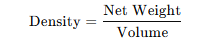
This value helps:
- Confirm mix proportions
- Estimate yield
- Detect excess air content
Lightweight concrete (e.g., with expanded clay) has a density as low as 1600 kg/m³.
14. What is air entrainment and why is it important?
Air entrainment involves introducing microscopic air bubbles into concrete, usually via chemical admixtures. These bubbles improve resistance to:
- Freeze-thaw cycles
- Deicing salts
- Scaling and cracking
How it works: During freezing, water expands. Air voids provide relief zones, reducing internal stress and preventing damage.
| Without Air Entrainment | With Air Entrainment |
|---|---|
| Cracks under freezing | Better freeze-thaw durability |
| Poor surface scaling | Enhanced durability |
Air content typically ranges from 4% to 7% depending on aggregate size and exposure class. Testing is done using the pressure method (ASTM C231).
However, excess air reduces strength, so balance is key.
15. What causes cracks in concrete and how can they be controlled?
Concrete cracks can be due to multiple reasons:
Types and Causes:
- Plastic Shrinkage: Rapid moisture loss before setting
- Drying Shrinkage: Volume reduction as water evaporates
- Thermal Cracks: Due to heat of hydration
- Structural Cracks: From overloading or poor design
- Settlement Cracks: Due to formwork movement or vibration
Prevention:
- Use proper curing
- Avoid high water-cement ratio
- Place construction joints strategically
- Add fibers or shrinkage-reducing admixtures
- Maintain temperature control in mass concrete
Cracks wider than 0.3 mm are generally considered problematic, especially in structural elements.
16. How do you determine the setting time of concrete?
Setting time defines the transition from plastic to hardened state:
- Initial Set: Concrete starts losing plasticity
- Final Set: Concrete can resist a certain load without deformation
Tested using the Vicat apparatus (per ASTM C191 or IS 4031):
- Initial setting time: ~30–90 minutes
- Final setting time: ~180–600 minutes
Factors influencing setting time:
- Cement type (rapid hardening vs. PPC)
- Temperature (hot weather reduces time)
- Admixtures (retarders/accelerators)
Site logic: Rapid setting can reduce workable time, leading to cold joints. Always plan pours and transportation accordingly.
17. What is the difference between OPC and PPC?
| Feature | OPC (Ordinary Portland Cement) | PPC (Portland Pozzolana Cement) |
|---|---|---|
| Composition | Pure clinker + gypsum | Clinker + pozzolanic material (fly ash) |
| Strength gain | Fast | Slower but more durable |
| Heat of hydration | High | Lower |
| Sulphate resistance | Lower | Higher |
| Cost | Higher | Lower |
PPC is preferable for marine, sewage, and mass concreting due to better long-term performance. OPC is chosen where early strength is critical (e.g., precast).
18. What are the grades of concrete and what do they signify?
Concrete grade refers to its characteristic compressive strength after 28 days:
| Grade (IS 456) | Strength (MPa) | Use Case |
|---|---|---|
| M10, M15 | 10–15 | Non-structural work |
| M20 | 20 | Residential buildings |
| M25–M40 | 25–40 | Commercial, reinforced concrete |
| M50+ | 50+ | High-performance, infrastructure |
In the US, grades are defined in psi:
- 3000 psi ≈ 20 MPa
- 4000 psi ≈ 28 MPa
Grades guide mix design and material selection. Always use design mix for M25 and higher.
19. How do you ensure concrete quality on site?
On-site quality control involves multiple checks at every stage:
- Material Inspection: Cement freshness, aggregate grading
- Mixing: Check mix proportions, mixer efficiency
- Workability Test: Slump or flow test
- Placement: Proper compaction, vibration
- Curing: Continuous moisture for at least 7 days
- Sampling: Make cubes/cylinders for strength tests
Log sheets, site checklists, and periodic testing (sieve analysis, silt content, moisture content) are essential. Visual inspections also play a big role in identifying segregation, bleeding, or honeycombs.
20. What is the role of aggregate in concrete?
Aggregates occupy 60–75% of concrete volume and play a structural and economic role:
- Coarse Aggregate (10–20 mm): Provides bulk, improves strength
- Fine Aggregate (sand): Fills voids, improves finish
Desirable properties:
- Hardness
- Clean (low silt/clay)
- Well-graded
- Low water absorption
Poor-quality aggregate leads to:
- Cracks
- Low strength
- Durability issues
Standard tests include:
- Sieve analysis (grading)
- Aggregate impact and crushing value
- Specific gravity
- Water absorption
Proper aggregate selection ensures performance and longevity of concrete structures.
21. What are the different methods of curing concrete?
Curing is essential to maintain adequate moisture and temperature in concrete for hydration and strength gain. The most common curing methods include:
| Method | Description | Suitable For |
|---|---|---|
| Water curing | Ponding, sprinkling, or wet coverings | Slabs, pavements, general works |
| Membrane curing | Spraying curing compounds to form a moisture-retaining film | Large surfaces, inaccessible areas |
| Steam curing | Steam at high pressure and temperature | Precast concrete elements |
| Covering with wet materials | Hessian cloth, burlap, or sand kept moist continuously | Sloped or vertical surfaces |
Factors affecting method selection:
- Ambient temperature
- Accessibility
- Size and shape of elements
- Type of cement
Proper curing for at least 7 days (or 14 days for PPC) is essential. Inadequate curing can reduce strength by up to 50% and increase surface cracking.
22. What is alkali-silica reaction (ASR) in concrete?
Alkali-Silica Reaction (ASR) is a chemical reaction between alkalis in cement and reactive silica in aggregates, forming an expansive gel that absorbs water and swells.
Symptoms:
- Map cracking or crazing
- Gel exudation on surface
- Long-term expansion and deterioration
Control Measures:
- Use low-alkali cement (Na₂Oeq < 0.6%)
- Replace reactive aggregates
- Use supplementary cementitious materials (fly ash, silica fume)
- Lithium-based admixtures
ASR can lead to serious durability issues, especially in dams, bridges, and humid environments. Petrographic analysis helps in early detection.
23. What is the difference between dry mix and wet mix concrete?
| Parameter | Dry Mix Concrete | Wet Mix Concrete |
|---|---|---|
| Water addition | At the point of application | At the batching plant |
| Transportation | In dry state | In fully mixed state (transit mixer) |
| Common usage | Shotcrete, small repairs | Structural works, foundations |
| Workability control | On-site adjustments | More consistent |
Dry mix is mostly used in shotcreting applications where water is added at the nozzle. Wet mix is more common for mass concreting and offers better control over mix consistency.
24. What are formwork requirements for concrete work?
Formwork is the temporary mold into which concrete is poured. Good formwork should be:
- Rigid and strong to resist pressure
- Dimensionally accurate
- Non-absorbent or oiled to prevent water loss
- Easy to assemble and remove without damaging concrete
Types:
- Timber (conventional)
- Steel (reusable, durable)
- Aluminum (lightweight)
- Plastic (modular systems)
Checklist:
- Check for tight joints (to prevent leakage)
- Use proper shuttering oil
- Ensure correct alignment and bracing
- Remove at appropriate time (usually 16–24 hrs for vertical forms)
Failure in formwork design or bracing can cause collapse, honeycombing, or surface defects.
25. What is concrete bleeding and how is it tested?
Bleeding is when water rises to the surface of freshly placed concrete due to settlement of heavier particles. It results in:
- Weak surface layer
- Reduced bond with reinforcement
- Formation of laitance
Testing (ASTM C232):
- Fill a cylinder with fresh concrete.
- Place a graduated cylinder to collect bleed water.
- Measure water volume over time.
Bleed water rate is expressed as a percentage of total mixing water.
Control Measures:
- Use lower w/c ratio
- Add finer cementitious materials (fly ash, silica fume)
- Use air-entraining agents or viscosity modifiers
- Avoid over-vibration
Bleeding is especially harmful in flatwork and slabs.
26. What is the function of reinforcement in concrete?
Concrete is strong in compression but weak in tension. Steel reinforcement provides tensile strength and ductility.
Functions:
- Resists tensile and shear forces
- Controls cracking due to shrinkage
- Helps in stress redistribution
- Improves impact resistance
Common types:
- Mild steel bars
- High Yield Strength Deformed (HYSD) bars
- TMT bars (Thermo-Mechanically Treated)
Bond between steel and concrete is vital. Proper cover, bar spacing, and anchorage must be ensured to avoid corrosion and ensure structural integrity.
27. How do you test concrete for durability?
Durability testing ensures the concrete will withstand environmental conditions over time.
Common tests:
| Test | Property Measured | Standard |
|---|---|---|
| Water absorption | Porosity and permeability | IS 1199 |
| Rapid chloride penetration test (RCPT) | Resistance to chloride ions | ASTM C1202 |
| Sulphate attack resistance | Chemical resistance | ASTM C1012 |
| Carbonation depth | Resistance to CO₂ ingress | Phenolphthalein test |
| Freeze-thaw resistance | Resistance to cycles of freezing | ASTM C666 |
Durable concrete has low permeability, minimal shrinkage, and adequate cover depth. Using supplementary materials and proper curing enhances durability.
28. What are the properties of hardened concrete?
Once concrete sets and hardens, it should exhibit the following properties:
- Compressive Strength: Measured at 28 days, indicates structural capacity
- Durability: Resistance to weathering, chemicals, and wear
- Permeability: Low permeability ensures resistance to corrosion and chemical attack
- Shrinkage: Excess shrinkage causes cracking
- Modulus of Elasticity: Measures deformation under stress
| Property | Desired Performance |
|---|---|
| Strength | ≥ Design requirement (e.g., 25 MPa) |
| Durability | Meets exposure class (e.g., XF4) |
| Surface Finish | Smooth and free of honeycombs |
Regular testing and inspection help verify that hardened concrete meets specification.
29. What is batching and why is it important?
Batching is the process of measuring materials for concrete production. Two methods:
- Volume Batching: Measuring by volume (e.g., buckets or boxes) – less accurate
- Weight Batching: Measuring by weight – more accurate and preferred
Importance:
- Ensures consistency
- Avoids excess water or cement
- Prevents variation in strength and durability
- Essential for mix design compliance
Best Practice: Use computerized weigh batching plants, especially for large projects. Manual batching often leads to inconsistency and waste.
30. What is the difference between screed and concrete?
| Feature | Concrete | Screed |
|---|---|---|
| Composition | Cement + aggregates + water | Cement + fine sand + water |
| Thickness | 100 mm and above | 25–75 mm |
| Strength | Structural (e.g., M25) | Non-structural (5–15 MPa) |
| Use | Foundations, slabs, columns | Surface leveling, flooring base |
Screed is laid over concrete to provide a smooth finish before applying flooring. It can be traditional (sand-cement) or flowing (self-leveling). Not used for load-bearing purposes.
31. What is segregation in concrete and how can it be avoided?
Segregation refers to the separation of concrete components—mainly coarse aggregates from the cement paste and fine aggregates—during handling, placing, or compaction.
Causes:
- Over-vibration
- Excessive water in the mix (high slump)
- Poorly graded aggregates
- Long drop height during placement
Effects:
- Honeycombing
- Weak zones with lower strength
- Reduced durability due to poor bond and permeability
Prevention Measures:
- Maintain optimal water-cement ratio
- Use cohesive mix with fines and admixtures
- Limit the free-fall height of concrete (< 1.5 meters)
- Use proper chutes or tremie pipes
- Compact uniformly and adequately
Field engineers should monitor visual signs of segregation (e.g., excessive paste flow or aggregate clustering) and take corrective action immediately.
32. How do you conduct a rebound hammer test?
The rebound hammer test (Schmidt Hammer Test) is a non-destructive method to estimate the compressive strength of concrete surfaces.
Procedure:
- Ensure the surface is clean and dry.
- Hold the rebound hammer perpendicular to the surface.
- Press against the surface until the hammer impacts.
- Read the rebound number on the scale.
- Correlate with strength using calibration curves or charts.
Key Notes:
- Tested as per ASTM C805 or IS 13311
- Only gives surface hardness, not internal strength
- Rebound values are influenced by:
- Surface smoothness
- Moisture content
- Carbonation
- Age of concrete
It’s best used for comparative tests or quality control, not definitive strength determination.
33. What is a core test in concrete?
Core testing involves extracting cylindrical samples from hardened concrete using a core cutter and testing them for compressive strength.
Steps:
- Drill a core (usually 100 mm or 150 mm diameter) from the structure.
- Trim to ensure flat ends.
- Cap or grind ends for uniform load distribution.
- Test in a compression machine.
Applications:
- Confirm in-situ strength when cube tests fail
- Evaluate old or repaired structures
- Structural assessments
Standards: ASTM C42 or IS 516
Corrections are applied for:
- Core diameter and length
- Moisture condition
- Direction of coring (horizontal or vertical)
Cores give a more realistic strength value than surface tests but are destructive and limited in number.
34. What is the purpose of using fly ash in concrete?
Fly ash is a pozzolanic material, a by-product from coal combustion in power plants. When used in concrete:
Benefits:
- Reacts with calcium hydroxide to form additional C-S-H gel
- Improves workability (acts as a filler)
- Enhances durability (reduced permeability)
- Reduces heat of hydration
- Improves long-term strength
Types:
- Class F (low calcium) – better for durability
- Class C (high calcium) – may have cementitious properties
Typical replacement: 15–30% of cement content
Limitations:
- Slower early strength gain
- Not ideal for cold weather concreting
Fly ash is widely used in PPC and high-performance concrete, especially for large pours or structures exposed to aggressive environments.
35. What is laitance and how do you prevent it?
Laitance is a weak, powdery layer of cement and fines that accumulates on the surface of fresh concrete, often due to:
- Bleeding water carrying fine particles upward
- Over-troweling or overworking the surface
- Excessive water-cement ratio
- Poor curing
Problems:
- Weak surface prone to dusting
- Poor bonding with toppings or coatings
- Accelerated deterioration
Prevention:
- Use a cohesive mix (avoid bleeding)
- Do not overwork the surface before bleeding stops
- Use screeds and bull floats at the correct time
- Ensure prompt and continuous curing
For repairs, remove laitance via mechanical means (grinding, sandblasting) before applying coatings or toppings.
36. What is self-compacting concrete (SCC)?
Self-Compacting Concrete flows and fills formwork under its own weight without vibration.
Properties:
- High flowability
- Segregation resistance
- High passing ability through dense reinforcement
Uses:
- Complex formwork
- Congested reinforcement
- Precast elements
- Architectural finishes
Key Tests:
| Test | Standard | Typical Value |
|---|---|---|
| Slump flow | ASTM C1611 | 600–800 mm |
| V-funnel time | EFNARC | <10 seconds |
| L-box ratio | EFNARC | >0.8 |
SCC uses superplasticizers, viscosity modifiers, and a controlled mix design. It improves quality, speed, and reduces noise and labor on site.
37. What are cold joints and how do you prevent them?
Cold joints occur when a batch of concrete is placed after the previous batch has partially set. This results in poor bonding between layers.
Causes:
- Delayed delivery
- Inadequate manpower
- Poor coordination during pouring
Consequences:
- Weak plane in the structure
- Reduced structural integrity
- Potential leakage in water-retaining structures
Prevention:
- Plan pours carefully
- Maintain continuous placement
- Use retarding admixtures for delay-prone pours
- Roughen and clean the previous surface if unavoidable
- Apply bonding agents or grout slurry before placing new concrete
Cold joints are especially critical in vertical pours like columns and walls.
38. What is permeability of concrete and why is it important?
Permeability measures how easily water, air, or other substances pass through hardened concrete. High permeability can lead to:
- Steel corrosion
- Freeze-thaw damage
- Chemical attack
- Sulphate ingress
Controlled by:
- Water-cement ratio (lower = better)
- Curing quality
- Use of supplementary cementitious materials (fly ash, silica fume)
- Compaction
Test Methods:
- Water penetration under pressure (DIN 1048)
- Rapid Chloride Penetration Test (ASTM C1202)
- Sorptivity test
Durability improves as permeability decreases. Target is usually <10⁻¹¹ m/s for high-performance concrete.
39. What is the difference between cube strength and cylinder strength?
Concrete strength can be tested using cube or cylinder specimens, but the values differ.
| Property | Cube Strength | Cylinder Strength |
|---|---|---|
| Shape | 150 mm cube | 150 mm dia × 300 mm height |
| Test code | IS 516 | ASTM C39 |
| Typical use | India, UK | USA, Canada |
| Value comparison | ~20% higher than cylinder | ~80% of cube strength |
Why the difference?
- Cube specimens have a lower height-to-width ratio (1:1), giving higher strength readings.
- Cylinder specimens better represent in-situ strength due to more realistic stress distribution.
Always convert values based on region and specification when comparing designs.
40. How do you test for moisture content in aggregates?
Moisture content affects the actual water-cement ratio, making it essential to adjust mixing water.
Testing Methods:
- Oven Drying Method (accurate)
- Weigh sample (W1)
- Dry in oven at 110°C for 24 hrs
- Weigh again (W2)
- Moisture (%) = (W1−W2)/W2× 100
- Speedy Moisture Tester (on-site)
- Calcium carbide reacts with water to release gas
- Pressure gauge indicates moisture percentage
Types of Moisture:
- Surface moisture
- Absorbed moisture
- Free moisture
Adjust batch water based on total moisture to maintain correct w/c ratio. Excess moisture can cause segregation, reduced strength, and durability issues.
41. What is shotcrete and where is it used?
Shotcrete is concrete or mortar conveyed through a hose and pneumatically projected at high velocity onto a surface. It is compacted by the force of impact.
Types:
- Dry-mix shotcrete: Dry ingredients mixed with water at the nozzle
- Wet-mix shotcrete: Premixed with water before entering the hose
Applications:
- Tunnel linings
- Slope stabilization
- Swimming pools
- Underground mining
- Repair of damaged concrete structures
Advantages:
- Excellent bond with substrates
- Suitable for complex geometries
- Reduces formwork requirement
- Rapid application and setting
Quality depends on skilled nozzlemen and controlled application. Accelerator admixtures are often used to speed up setting time in overhead or vertical applications.
42. What is the difference between bleeding and segregation in concrete?
| Feature | Bleeding | Segregation |
|---|---|---|
| Definition | Upward movement of water | Separation of coarse aggregates |
| Cause | Excess water or poor mix | Poor gradation, over-vibration |
| Sign | Water sheen on the surface | Aggregate at bottom, paste at top |
| Effects | Weak surface layer, laitance | Honeycombs, strength loss |
| Prevention | Lower w/c ratio, proper mixing | Well-graded mix, minimize drop height |
Both issues compromise the quality and durability of concrete. Field inspection and corrective actions during pouring are crucial.
43. What is the role of silica fume in concrete?
Silica fume is an ultra-fine, highly pozzolanic material collected from silicon and ferrosilicon alloy production. When added to concrete:
Benefits:
- Fills microscopic voids (microfiller)
- Enhances compressive and flexural strength
- Greatly reduces permeability
- Increases resistance to sulphate and chloride attack
- Improves bond strength with rebar
Typical dosage: 5–10% of cement weight
Often used in:
- Marine structures
- Bridge decks
- Parking garages
- High-performance concrete (HPC)
Due to its fine particles, it may reduce workability—requiring superplasticizers for flowability.
44. What are expansion joints and why are they used in concrete?
Expansion joints are intentional gaps placed in concrete to allow for thermal movement, shrinkage, or other structural displacements without cracking.
Why needed:
- Concrete expands in heat and contracts in cold
- Restrained movement leads to internal stresses and cracking
- Expansion joints absorb this movement safely
Where used:
- Long pavements
- Bridges
- Sidewalks
- Industrial floors
Filled with: Flexible materials like rubber, bitumen, or neoprene
Proper spacing and sealing are essential to prevent water ingress or joint failure.
45. How do you control plastic shrinkage cracking?
Plastic shrinkage occurs in fresh concrete when surface water evaporates faster than it is replaced by bleeding.
Conditions leading to it:
- High ambient temperature
- Low humidity
- Windy weather
Control Measures:
- Dampen subgrade and formwork
- Use windbreaks or sunshades
- Add fibers to mix (polypropylene)
- Begin curing as soon as finishing is done
- Use evaporation retardants (sprays)
Cracks typically appear within hours after pouring and are shallow but can widen over time if left unchecked.
46. What are the different exposure classes in concrete durability design?
Exposure classes define environmental conditions affecting concrete durability. Based on IS 456 and Eurocode EN 206:
| Exposure Class | Description | Example |
|---|---|---|
| Mild | Dry or continuously wet | Interiors, buried concrete |
| Moderate | Occasional wetting | Sheltered external walls |
| Severe | Frequent wetting and drying | Bridges, open roof decks |
| Very Severe | Marine or de-icing exposure | Coastal buildings, highways |
| Extreme | Aggressive chemicals or seawater | Chemical plants, marine piles |
Durability requirements like cover depth, w/c ratio, and cement type depend on the exposure class.
47. What is a concrete retarder and when is it used?
Retarders are admixtures that delay the setting time of concrete without affecting strength development significantly.
Used when:
- High ambient temperatures accelerate setting
- Concrete needs to be transported over long distances
- Successive layers are placed (to avoid cold joints)
- Large pours need extended workability
Common Types:
- Lignosulphonates
- Phosphates
- Sugars (used in small, controlled quantities)
Retarders must be dosed carefully—excess can lead to delayed setting, bleeding, and strength loss.
48. What are the signs of poor concrete quality on site?
Visual and measurable indicators of poor-quality concrete include:
- Segregation and bleeding during placement
- Honeycombing or voids after formwork removal
- Laitance or dusty surface
- Cracking (early or late)
- Discoloration or inconsistent finish
- Low slump or excessively high slump
- Low compressive strength in cube tests
Prevention involves:
- Regular quality checks (slump, temperature, moisture)
- Adequate curing and compaction
- Correct batching and mix control
- Qualified manpower and supervision
Early detection allows for immediate repair or corrective action.
49. What is the process of ready-mix concrete (RMC) delivery?
Ready-Mix Concrete (RMC) is produced in a central batching plant and delivered to the site in transit mixers.
Steps:
- Order based on required grade, slump, and volume
- Materials batched and mixed at the plant
- Concrete loaded into mixer truck
- Continuous agitation during transport (typically within 90 mins)
- Concrete discharged into pump or directly to formwork
Advantages:
- Consistent quality
- Saves labor and time
- Reduces storage needs on-site
Ensure time between batching and placement doesn’t exceed standard limits (typically 90 minutes or 300 drum revolutions per ASTM C94).
50. What is mass concrete and how is it managed?
Mass concrete refers to large volumes of concrete where the heat generated during hydration can’t dissipate easily, leading to thermal cracking.
Common in:
- Dams
- Foundations
- Bridge piers
- Retaining walls
Risks:
- Thermal gradients between interior and surface
- Internal stresses causing cracking
Management Techniques:
- Use low-heat cement or fly ash
- Pre-cool ingredients (e.g., chilled water, ice)
- Limit cement content
- Use temperature sensors and control plans
- Extended curing (e.g., 14 days or more)
- Pour in layers with cooling pipes if needed
Thermal control plans are critical for preventing long-term durability issues.
Conclusion
Preparing for a concrete technician interview means mastering both theoretical concepts and practical site knowledge. From understanding concrete mix properties and testing methods to troubleshooting common field issues, each answer reveals your capability to ensure quality construction. With increasing demands for durability and sustainability, technicians who grasp the science behind their work stand out to hiring managers.
Key Takeaways
- Slump, compressive strength, and curing are foundational knowledge for any technician.
- Field challenges like bleeding, segregation, and cracking must be controlled through mix and method.
- Familiarity with test standards (ASTM, IS, ACI) and site procedures is essential.
- Understanding admixtures, mix design, and special concretes (e.g., SCC, mass concrete) adds technical depth.
- Quality assurance requires proactive testing, inspection, and communication.
This complete guide equips you to confidently tackle interviews and deliver performance on-site or in the lab.
